Meta Turns Internal Workforce into Data Lab to Accelerate Autonomous AI Agents
By SignalWire Newsroom — — 5 min read
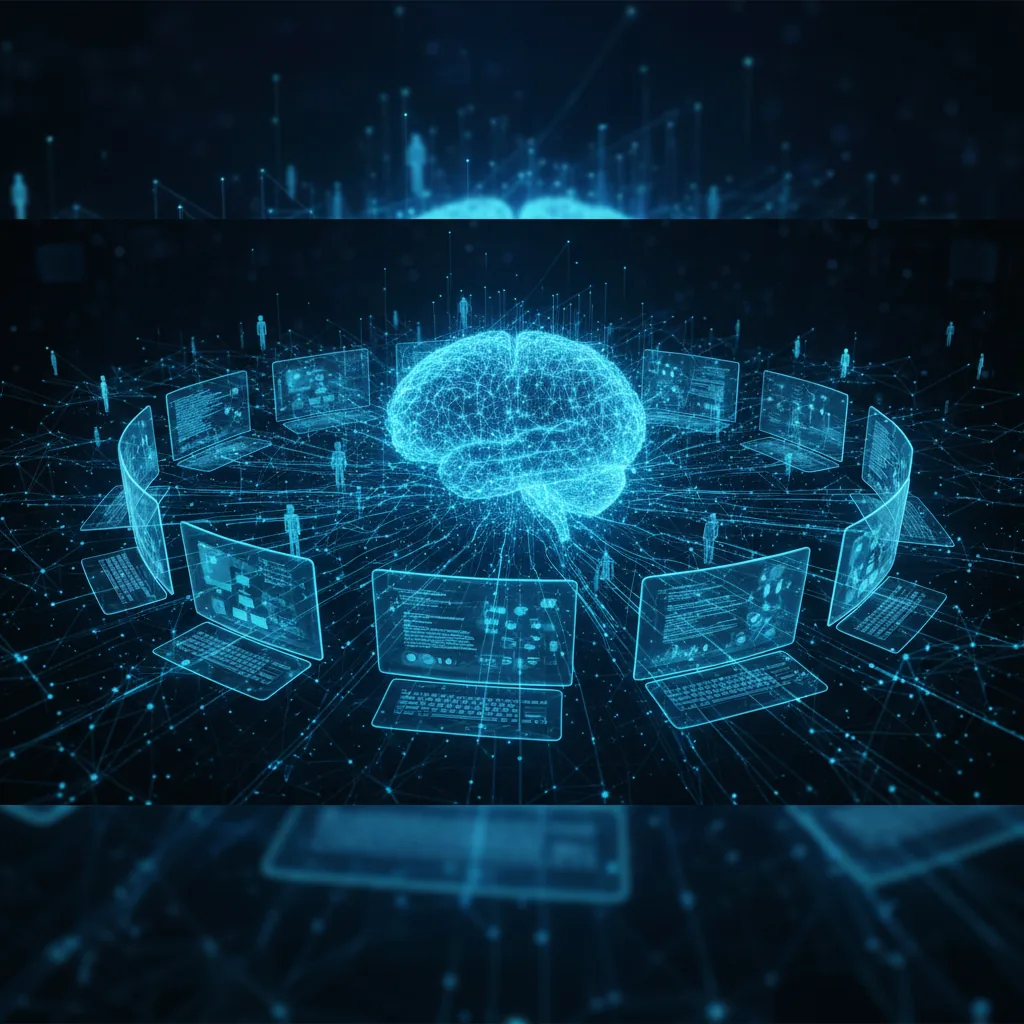
Meta is deploying new internal software to monitor employee computer usage, using the data to train autonomous AI agents to perform complex professional tasks.
Meta Platforms Inc. is reportedly expanding its internal data harvesting efforts, turning its own workforce into a giant training set for the next generation of artificial intelligence. The social media giant is implementing software to track how employees interact with their computers, aiming to capture the nuanced workflows and decision-making processes required to build more autonomous and capable AI agents.
Background
The pursuit of 'Agentic AI' has become the new frontline in the silicon valley arms race. While large language models (LLMs) like Llama 3 can generate text and code, the industry is shifting toward 'agents'—systems that can perform complex, multi-step tasks across various software applications autonomously. Building these agents requires more than just vast amounts of internet text; it requires 'demonstration data,' or step-by-step examples of human experts performing specialized digital tasks.
In the past, Meta has relied on synthetic data and publicly available datasets. However, to create agents capable of high-level professional work, the company needs to see how high-level professionals actually work. This has led to the decision to monitor internal employee activity, effectively treating the corporate desktop as a high-fidelity laboratory.
Latest Developments
According to internal reports, the new tracking initiative involves capturing metadata and low-level interactions from employee devices. This includes how developers navigate IDEs (Integrated Development Environments), how project managers orchestrate workflows across productivity suites, and how designers iterate on visual assets. The goal is to identify patterns in problem-solving that are often 'invisible' to traditional data scraping.
While Meta has assured staff that the data collection is focused on professional tasks and will be anonymized, the move has sparked internal discussions regarding the boundaries between productivity monitoring and AI development. The initiative is part of a broader push under Mark Zuckerberg's 'Year of Efficiency' philosophy, where every internal resource—including the actions of the talent pool—is leveraged to accelerate AI breakthroughs.
- The software tracks mouse movements, keystroke patterns, and application switching to map out complex workflows.
- Data is being used to train 'Action Models' that can eventually navigate UI elements without human intervention.
- Initial pilot programs are focused on software engineering and internal administrative tasks.
- Meta has implemented privacy guardrails to prevent the capture of sensitive personal information or passwords.
- The project is expected to significantly reduce the time required to fine-tune AI agents for enterprise environments.
Expert Insights
What we are seeing is the transition from AI that talks to AI that does. By monitoring their own employees, Meta is bypassing the 'noisy' data of the public internet to capture high-signal expert behavior. It’s a logical move for a company under pressure to deliver ROI on its massive infrastructure investments, though it sets a significant precedent for the future of workplace privacy.
Senior AI Industry Analyst
Real-World Impact
The implications of this move extend far beyond Meta's Menlo Park headquarters. If Meta successfully utilizes internal behavior to create superior AI agents, other tech conglomerates like Google, Microsoft, and Amazon are likely to follow suit, potentially making 'behavior harvesting' a standard clause in employment contracts.
For the broader workforce, this development signals the arrival of the 'Agentic Era.' If AI can learn the intricacies of a software engineer's or a digital marketer's job by watching them, the value proposition of human labor shifts from 'execution' to 'oversight.' In the short term, this could lead to highly efficient internal tools that handle mundane corporate bureaucracy; in the long term, it raises questions about the shelf life of the very skills being tracked and automated.
Key Takeaways
- Meta is capturing employee interaction data to build 'agentic' AI capable of performing autonomous tasks.
- The tracking focuses on high-level professional workflows like software engineering and project management.
- This move highlights a shift in AI development toward 'demonstration data' over traditional web scraping.
- Privacy concerns are rising as the line between productivity monitoring and data harvesting blurs.
FAQ
Why is Meta tracking employee computer activity?
The primary goal is to gather 'demonstration data' that shows AI models how to perform multi-step digital tasks, such as coding, scheduling, and project management.
Is this monitoring legal and private?
Meta has stated that the tracking is focused on professional workflows and includes privacy measures to anonymize data and exclude sensitive personal information.
What are 'AI Agents' compared to standard AI?
Unlike chatbots, AI agents are designed to take actions across different software tools, such as booking a flight, writing and deploying code, or managing a marketing campaign autonomously.