The End of LCD? Alienware’s $350 QD-OLED Monitor Disrupts the Gaming Market
By SignalWire Newsroom — — 5 min read
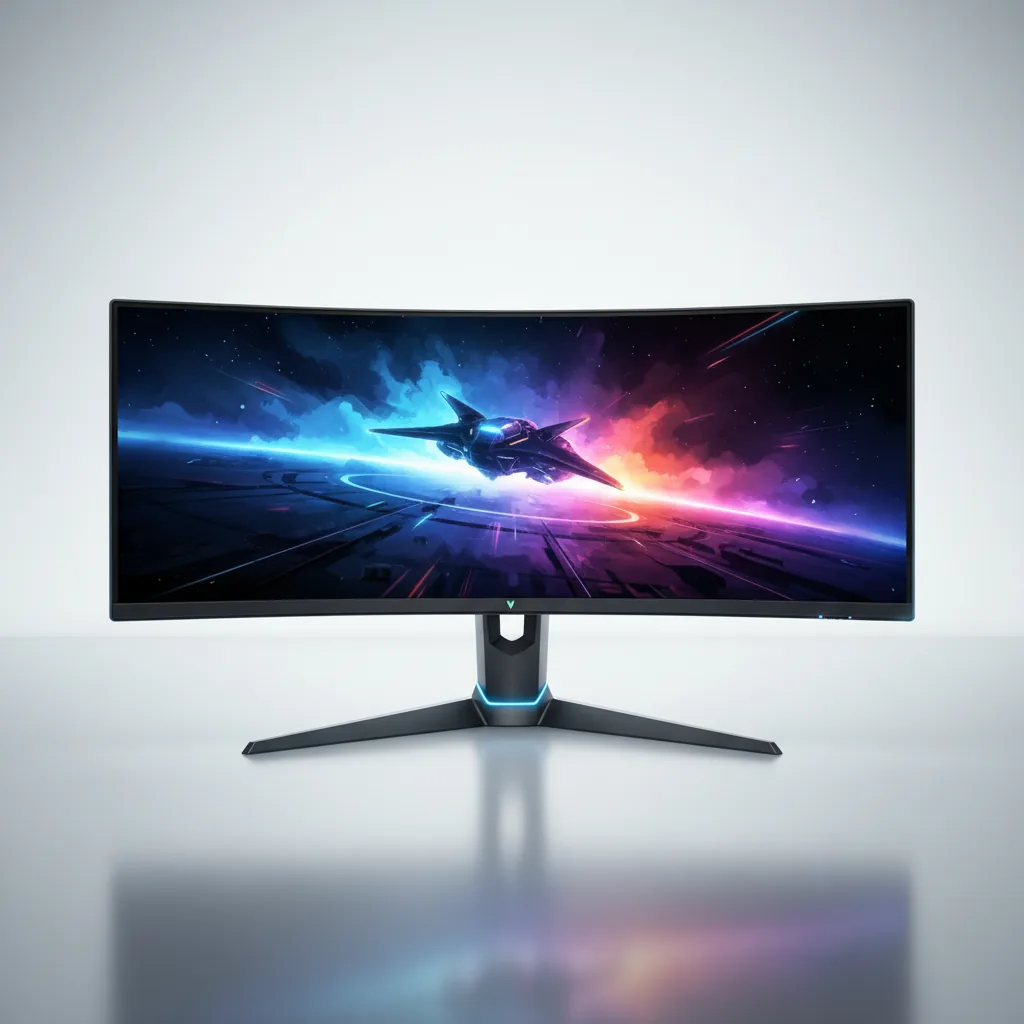
Alienware has shattered the price barrier for premium gaming displays with its new $350 QD-OLED monitor, bringing high-end visual fidelity to the mainstream market.
Background
For years, the gold standard of gaming displays rested on traditional LCD panels, often enhanced by IPS or VA technology. While these served players well, the 'black levels' were frequently criticized for appearing as a muddy grey, and pixel response times often led to motion blur during high-speed action. The introduction of Organic Light Emitting Diode (OLED) technology promised to fix these issues by allowing each individual pixel to turn completely off, providing infinite contrast.
However, high entry costs were the primary barrier. Until recently, a high-refresh-rate OLED monitor would easily cost upwards of $800 to $1,000, relegating the technology to enthusiasts and professional esports players. Alienware, Dell's gaming subsidiary, has disrupted this trend by bringing Quantum Dot OLED (QD-OLED) technology into a much more aggressive price bracket, specifically with the release of the AW2726DM model.
Latest Developments
The arrival of the Alienware AW2726DM marks a significant shift in the market. Traditionally, 'budget' OLEDs were non-existent, but recent manufacturing efficiencies at Samsung Display (the provider of the QD-OLED panels) have allowed brands like Alienware to target the $350-$400 sweet spot. This particular monitor offers a 1440p resolution—often considered the balanced 'perfection' for mid-to-high-range gaming PCs—combined with the signature color vibrancy of Quantum Dot technology.
Recent hands-on testing and consumer feedback indicate that while the price has dropped, the performance metrics remain competitive with flagship models from previous years. The panel supports a 180Hz refresh rate and near-instantaneous response times, effectively eliminating the ghosting found on traditional LCDs. This move signals a broader industry trend where premium display specifications are rapidly trickling down to the mainstream consumer.
Key Facts
- The monitor utilizes a 27-inch QD-OLED panel with a native 2560 x 1440 resolution.
- It provides a 180Hz refresh rate, making it suitable for competitive first-person shooters and racing games.
- The QD-OLED technology offers 99.3% DCI-P3 color coverage, outperforming most professional-grade LCD monitors.
- Unlike standard OLEDs, QD-OLED uses quantum dots to convert blue light into red and green, resulting in higher peak brightness and more vivid colors.
- The $350 price point represents a roughly 50% decrease in entry-level costs for high-refresh QD-OLED technology compared to 24 months ago.
Expert Insights
The aggressive pricing of OLED panels in the 27-inch segment is a calculated move to clear existing inventory of first and second-generation panels as manufacturers pivot toward higher-density 4K production. For the average consumer, this creates a 'golden window' where high-end visual fidelity is suddenly available at a mid-range price point.
A supply chain analyst specializing in display technology
Real-World Impact
The impact of affordable OLEDs extends beyond just prettier graphics. In the world of competitive gaming, response time is measured in milliseconds. Traditional monitors often have a 'pixel transition' delay that can lead to slight visual artifacts during fast movement. Because OLED pixels can switch states almost instantly (often rated at 0.03ms GtG), players experience a level of visual clarity that was previously unattainable without specialized hardware.
Furthermore, this price shift is expected to force competitors like LG, ASUS, and Acer to re-evaluate their pricing structures for IPS-based monitors. If a consumer can purchase a superior OLED panel for $350, the market for $300 premium IPS monitors may effectively vanish. This democratization of technology ensures that high-fidelity HDR content—once the domain of expensive home theaters—is now accessible on a standard desk setup.
Key Takeaways
- OLED technology has significantly decreased in price, with Alienware offering a QD-OLED panel for just $350.
- The AW2726DM model features a 1440p resolution and a 180Hz refresh rate, balancing performance and visual quality.
- QD-OLED technology provides superior color accuracy and instantaneous response times compared to traditional LCDs.
- Industry trends suggest that premium display tech is becoming the new standard for mid-range gaming setups.
FAQ
What is the difference between OLED and QD-OLED?
QD-OLED (Quantum Dot OLED) combines the infinite contrast of OLED with the enhanced brightness and color range of Quantum Dots, resulting in a more vibrant image than standard OLED panels.
Is burn-in still a concern with this monitor?
While OLED monitors are susceptible to 'burn-in' if static images are left on for too long, modern monitors include features like 'Pixel Refresh' and 'Panel Refresh' to mitigate these risks. Alienware often includes a 3-year burn-in warranty.
Is it suitable for competitive esports?
Yes, the monitor features a 180Hz refresh rate and a 0.03ms response time, making it one of the most responsive options currently available for competitive play.