The End of the App Store? OpenAI’s Bold Plan for an AI-Native Smartphone
By SignalWire Newsroom — — 5 min read
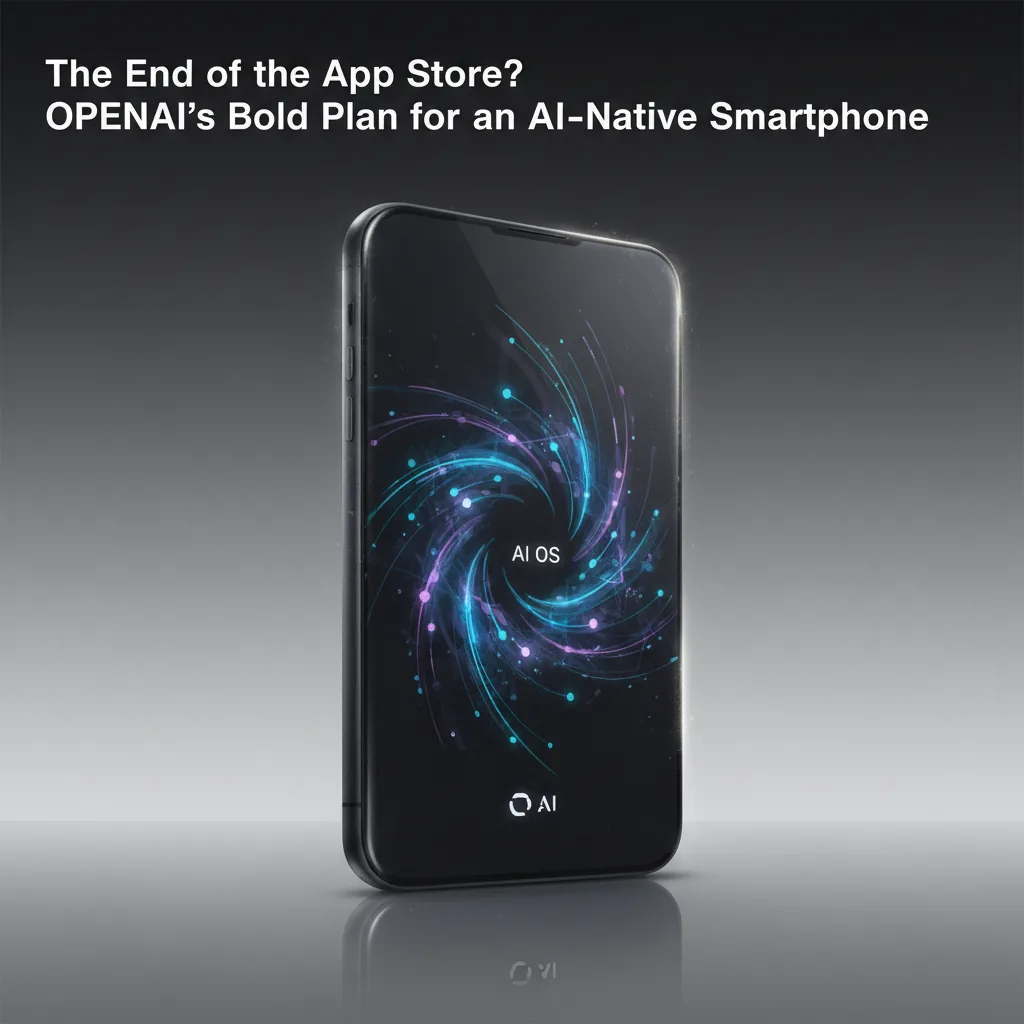
OpenAI is reportedly planning a hardware push that could eliminate apps in favor of autonomous AI agents, potentially upending the smartphone market.
The mobile hardware landscape is facing its most significant potential disruption since the introduction of the iPhone. OpenAI, the organization behind ChatGPT, is reportedly exploring the development of a proprietary smartphone designed to bypass the traditional app-based ecosystem in favor of autonomous AI agents. This move signals a radical departure from current software paradigms, aiming to simplify user interaction by making the artificial intelligence the primary interface.
Background
For over a decade, the 'App Store' model has dominated the mobile experience. Users download specific applications for discrete tasks: ordering food, booking travel, or managing emails. While effective, this siloed approach requires constant context-switching and manual navigation. OpenAI’s rumored entry into hardware follows a trend of 'AI-first' devices, such as the Humane AI Pin and the Rabbit R1, which attempted to move beyond the screen-centric experience. However, unlike these niche gadgets, an OpenAI-backed device would leverage the industry’s most powerful Large Language Models (LLMs) and a massive existing user base, potentially offering the first viable alternative to the iOS and Android duopoly.
Latest Developments
Reports suggest that OpenAI has been in discussions with legendary former Apple designer Jony Ive and SoftBank CEO Masayoshi Son to secure the design expertise and multi-billion dollar funding required for such a venture. The core concept revolves around 'agentic' workflows—AI that doesn't just provide information but takes action on behalf of the user. Instead of opening a travel app to compare flights and a calendar app to check dates, a user would simply tell the device their travel goals, and the AI agent would execute the bookings, handle payments, and update schedules across all relevant services. This vision requires a deep integration between hardware and software that current mobile operating systems may be unable to support without significant overhauls.
Key Facts
- The device is rumored to focus on a 'Natural Language' interface rather than a grid of icons.
- OpenAI is exploring custom silicon to handle local AI processing, reducing latency and reliance on the cloud.
- Collaborations with Jony Ive’s firm, LoveFrom, suggest a focus on high-end industrial design.
- The operating system would likely be a fork of a current platform or an entirely new 'AIOS'.
- Privacy remains a central challenge, as agents require deep access to personal data to function effectively.
Expert Insights
An industry analyst familiar with mobile hardware trends noted the shift: 'We are reaching a saturation point where the utility of a phone is limited by the friction of navigating between dozens of different apps. A device that replaces the app-switch with a unified agentic layer represents the first true evolution in mobile UX in twenty years, but the hardware must be flawless to convince users to switch.'
Real-World Impact
If successful, an OpenAI phone could fundamentally change the digital economy. If AI agents become the primary gatekeepers to services, the traditional 'discovery' model of the App Store would become obsolete. This poses a significant threat to Google and Apple’s service revenue, which relies heavily on commissions from app sales and in-app purchases. Furthermore, it would force developers to shift their focus from building visual interfaces to creating 'agent-ready' APIs. For the consumer, the impact would be a reduction in cognitive load, though it raises critical questions about data sovereignty and the potential for 'black box' decision-making by autonomous agents.
Key Takeaways
- OpenAI is exploring a dedicated hardware device centered on AI agents rather than apps.
- The project may involve collaboration with Jony Ive and significant funding from SoftBank.
- The device aims to simplify user experience by using natural language to execute complex tasks.
- Success would challenge the current dominance of the Apple and Google mobile ecosystems.
FAQ
How is an AI agent phone different from a normal smartphone?
Unlike current phones, an AI-agent phone would use a central intelligence to perform tasks across different services without the user needing to open individual applications like Uber or Expedia.
When will the OpenAI phone be released?
There is no official release date yet, as the project is reportedly in the early design and funding stages. Industry observers suggest a multi-year development cycle.
Will an AI-native phone be secure?
Privacy is a major concern. Such a device would require access to personal emails, banking, and location data to act as an agent, necessitating robust security protocols.